Showing posts with label trenddetective. Show all posts

Wednesday, December 11, 2013

Early 1900s Part 4: Mail Order Homes

When I drive around Utah, and on trips when we've seen the east coast, the Midwest, the west coast, and Florida, I want to know the history of almost every home that I see!  How is it that in my neighborhood, most homes being built are the same garage-dominated house with arts and crafts influence???

"New House Plans Deliver . . . " http://houseplans.co
Well, back in the early 1900s, homeowners were drawn to a different styles of houses than we are today.  Many homeowners built these homes using kit home manufacturers, or maybe the kit home manufacturers copied the homes that were being built by many people ;)  These historic catalogs are a way to document the history of popular home architecture styles from 100 years ago.

1910 Sears Home Catalog Cover, searshomes.org

There were many home catalog businesses in the early 1900s.  Montgomery Ward was the first company to every offer a catalog, beginning in 1872.  Sometime before WWI they were selling home kits (see antiquehomestyle.com).  Sears and Roebuck started selling pre-fabricated homes in 1908.  Aladdin Company started selling home kits in 1908.  Lewis Kit Homes at first was the major supplier for Aladdin Company, and then struck out on their own in 1914.  (See en.wikipedia.org "Montgomery Ward", "Sears Catalog Homes", "The Aladdin Company", instanthouse.blogspot.com "Lewis-Liberty Homes")


Kit homes were permanent, and constructed just like a custom home on site, just with materials that were bought in bulkd, pre-cut, and shipped to the customer, saving customers money. We should keep in the mind though, that the owner of a kit home would end up spending 2x as much as the catalog price on labor and foundation, plus the cost of the land. (See en.wikipedia.org "Kit Houses in North America")

1908 ad in Popular Mechanics, en.wikipedia.org "Kit Houses in North America"

There are a few typical home styles from the early 1900s.  The first is the simplified farmhouse plan with a gable roof, often 2 story, siding, a covered porch at the entrances--often with wood railing, and simple rectangle windows centered on the face of each side of the home:

searsarchives.com, "Sears Homes 1915-1920"

The next is a Dutch Revival, with a gambrel roof, siding, gabel-end chimney, dormers (see antiquehomestyle.com "Dutch Colonial Revival Style--1890-1940"):

1910 - The Bungalow Book - No. 414
antiquehomestyle.com, "1910 Dutch Colonial Revival"

Another style was the Craftsman Bungalow, with long eaves/cross-gabled roof lines, board and batten roof materials, cobblestone exterior materials at the bottom of the home, shake siding above, hefty pillars holding the roof for the covered porch, this one is a quintessential California Bungalow (see antiquehomestyle.com "Design No. 658")
 
1910 - The Bungalow Book - No. 658R
antiquehomestyle.com, "1910 Artistic Craftsman Bungalow"

The Foursquare with its boxy shape, front porch, 1.5 or 2 stories, hipped roof, and simple details:

1916 Sears Home No. 264B179, later "The Woodland", antiquehomestyle.com

Lastly, the Tudor, which appealed to the busy businessman.  Characteristics include a steeply pitched roof, board and batten siding, herringbone brickwork, mullioned windows, high chimneys, an overhanging first floor, pillared porches, dormer windows (see "Tudor Revival" enwikipedia.org):

1908 Western Home Builder, "Design No. 50", antiquehomestyle.com

This concludes the 4 part series on the Early 1900s.

Tuesday, October 29, 2013

Early 1900s Part 3: Interior Decoration

Now that we have looked at early 1900s architecture, here I re-construct the early 1900s popular color schemes, flooring, wall coverings, lighting, furniture, and upholstery.  I'll focus on the living room to show three different popular styles from this era: Colonial, Craftsman, and Tudor.

The country was pulling out of Victorian decorating (Queen Victoria died in 1901), which was opulent, heavy, and jewel-toned:


File:Henry Treffry Dunn Rossetti and Dunton at 16 Cheyne Walk.jpg
wikipedia "Victorian Decorative Arts", the drawing room at 16 Cheyne Walk in London


Below is a photograph of the John Rehder House taken about 1910, and you can see the Victorian influence still in the home (palms, ornate drapery, wicker chair, tufted chaise):

(Photograph courtesy of Catherine Marie Gerdes, John Rehder's great-great niece.)
susantaylorblock.com, "Interior Decorating, c. 1910"

There is a book called Inside the House that Jack Built published in 1914 about house furnishing.  In one of the houses, the popular Tudor style was used: paneled walls, heavier millwork, a large rug, heavy fireplace mantel, bulbous leg turnings on the desk.  The book refers to this room as "Old English in character":

Jack's Living Room (see Chapter II)
chestofbooks.com: architecture books  The House that Jack Built

This is another Tudor style room:

POSTCARD - CHICAGO - BELDEN HOTEL - TYPICAL LIVING ROOM - LOTT HOTELS INC - c1910

The other home in Inside the House that Jack Built is "colonial": demure millwork, chippendale chair, neoclassical fireplace.  I'm impressed that both living rooms have a big desk:

Cousin Tom's Living Room.
chestofbooks, architecture books Inside the House that Jack Built

Here is another Colonial style room illustrated in Ladies Home Journal:

ahundredyearsago.com: 1912 Holiday Decorating Ideas


Craftsman was coming into fashion for interiors.  This includes horizontal emphasis in design elements, built-ins, long and low fireplace, simple solid colors on walls divided by timber framing, rugs are not oriental or middle eastern designs:

1910 Albastine paint idea booklet
laurelhurstcraftsman.com, "Matching Historic Stencils to Period"

Here is another Craftsman style room with organic designs and furniture with square detailing:

clickamericana.com, "Hints for an informal Sunday supper (1910)"
Which early 1900s style would you put this in?  The wallpaper is large scale organic designs, the millwork is large scale and painted white, and the table has large turnings.  Definitely not Colonial:


According to antiquehomestyle.com, 1920 is when new materials of the modern decorating style developed. By 1930 Art Deco emerges as a fashionable, sleek, and streamlined way to decorate.

1930 2
pzrservices.typepad.com, 1930s illustration

Thursday, October 17, 2013

Early 1900s Part 2: Architecture

In order to understand early 1900s decorating, we have to individually look at the architecture of the time.  To set the stage, the country was pulling away from the prolific Victorian styles.  Named after Britain's Queen Victoria who was queen from 1837 until her death in 1901, the style had time to become ornate, eclectic, and colorful:


Milton Carson Home, Eureka
traveleredge.com: Milton Carson Home, Eureka

What we consider to be "modern architecture" today was not here in the early 1900s.  There were some hints around 1910 of what we call "modern" today.  The first is the simplified farmhouse (covered porch, dormer windows, white paint):

front view
oldhouses.com, "c. 1910 Farmhouse pine grove Rapid City, South Dakota"

1916 Sears - No. 264B110
antiquehomestyle.com, "Sears Roebuck 1916 'Modern Home No. 264B110'"

The simplified farmhouse is closely related to the Foursquare.  Looking at the floor plan, you can see that it was a democratic shift from the Victorian home.  Foursquares incorporated the kitchen into the main floor for the servant-less housewife (see wikipedia "American Craftsman"):

The American Foursquare home
lampsplus.com, "Mysteries of Old Houses"

flickr.com, "Yellow and Blue American Foursquare Houses"
1916 Sterling - Imperial
antiquestylehome.com, "1916 Sterling 'The Imperial'"

The Craftsman Bungalow is an evolution of the Foursquare.  It is more organic and horizontal, thanks to Frank Lloyd Wright, Louis Sullivan, and the Prairie School:

Louis Sullivan, architect
gardengrow.wordpress.com, Harold C Bradley Home built 1908-1909

Seattle craftsman house
blog.seattlepi.com, "Seattle Architectural Styles Through the Years..."
1916 Sterling - Macherie B
antiquestylehome.com, "Sterling Systems 'The MaCheri' 1916"

But revival (traditional) styles of architecture were also very popular.  Dutch Revival:

highlandparkfoursquare.blogspot.com, "Sweet 1910 Dutch Colonial Revival for Sale"
1924 Radford - Dover
antiquestylehome.com, "1924 Argo Summit 'The Dover'"

Tudor Revival:

File:Henry B Miller House (Portland, OR).JPG
athomeinportland.com, "Portland Classic Homes" Henry B. Miller home built 1911
1916 Sterling - Manseigneur
antiquestylehome.com, "Sterling Manse and Manseigneur 1916"

And the English Cottage:

English Cottage
antiquehomestyle.com, "English Cottage Style - 1920 to 1940"

1925 Pacific Ready Cut - No. 496
antiquehomestyle.com "Pacific Design No. 496"

We'll look next at the interior decoration of these early 1900s homes, and I've got a separate post on mail order homes from this era.

Tuesday, October 1, 2013

Early 1900s Part 1: Brooklyn

I've been reading A Tree Grows in Brooklyn, a classic 1943 book by Betty Smith about a young girl growing up poor in Brooklyn around 1912-1916.

A Tree Grows in Brooklyn
royalbooks.com, first edition of 1943 A Tree Grows in Brooklyn

Images that come to my mind as I read are pleasant but vague.  So I've gathered a collection of 1912-1916 Brooklyn images that help to set the stage for this book:

Tenament housing in Williamsburg, Brooklyn is where Francie Nolan grew up.  It probably looked something like this:

brooklynpix.com; Metropolitan Ave, Williamsburg Brooklyn 1916

Factories were nearby where the people worked hard to earn a meager living:

mcnycblog.org, "The Struggle to Save the Austin, Nichols, and Co. Warehouse"
V1988.35.5
brooklynhistory.org: female factory workers 1915 ca, Eberhard Faber Pencil Factory

Brooklyn (Trolley) Dodgers had another season in the new Ebbett's Field in 1913:

Ebbets Field 1913
thebaseballpage.com, "Ebbett's Field 1913"

A "trolley dodger" was a negative name that people from Manhattan had for the people of Brooklyn--because of Brooklyn's many trolleys (see wikipedia under "trolley dodger").  Here you can see a major intersection of trolleys in Brooklyn:

ebay.com photo for sale, "1916 Flatbush-Nostrand Aves Junction Trolleys Flatlands Brooklyn NYC Photo"

Brooklyn's Vitagraph Studios was one of the first film studios:

brooklynology.brooklynpuliclibrary.org: 1913 fashion shoot at Vitagraph Studios

Now that we've looked at Brooklyn specifically, I will be posting about early 1900s interior color schemes, flooring, wall coverings, lighting, furniture, and upholstery in another post.  I want to give everyone out there with a house built around this time the context for the architects and builders at that time.

Wednesday, May 15, 2013

In love with Tile

The more I work with tile, the more I love it!!  As a quilter in my teens and as a young mother passing my son's nap times with quilting, I had no idea that my love for color blocking would come in so handy as an interior designer working with tile.

I've come to really appreciate the story that you can tell with different stones that tile is made out of.

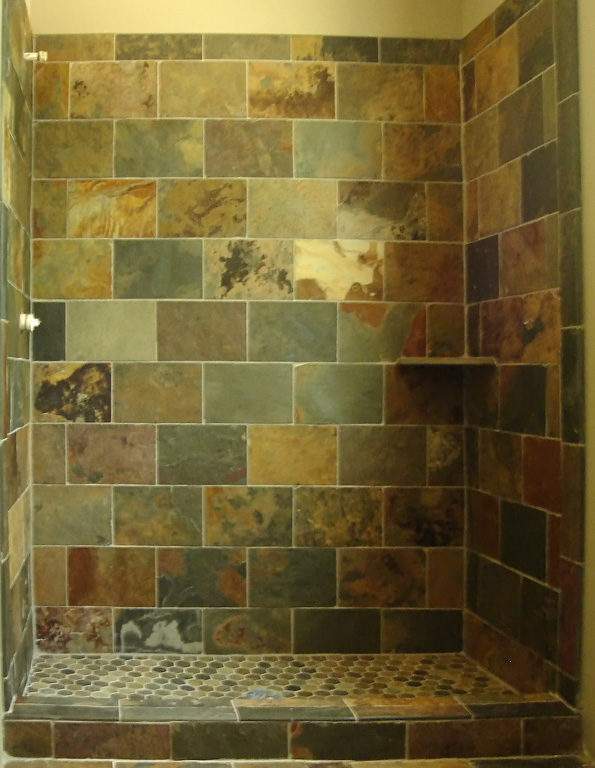
There is limestone (earthy yet classic):

http://www.woatile.com/images/shower6L-Slate-Tile-Shower-Installation.jpg

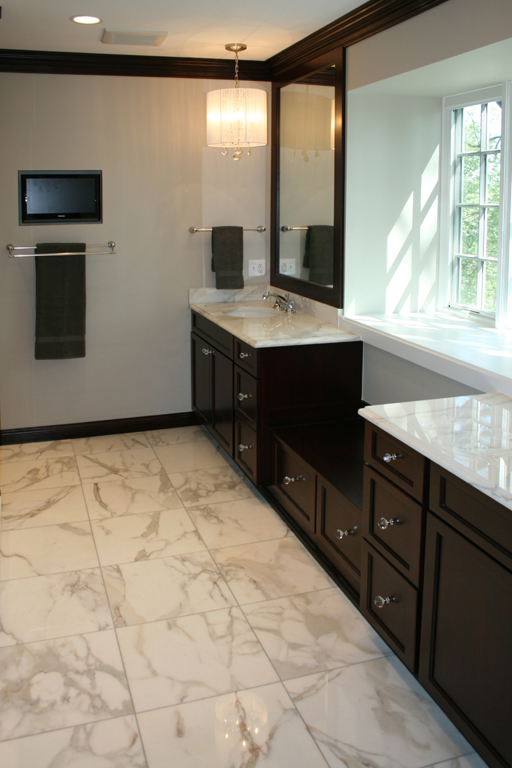
Or marble (upscale, refined, classic):

http://www.woatile.com/images/shower43L-bathroom-remodel-marble-floor-glazed-cherry-cabinets.jpg

Italian tile bathroom white marble ideas
http://www.homeconceptor.com/italian-tile-bathroom-white-marble.html

Travertine is a little overdone right now.  I hope that it becomes a classic though.

THE PATTERNS!  In my client's bathroom, we are going to take a basic porcelain tile that is printed to look like slate, and put it in an amazing pattern to kick it up a notch.  Putting tile in the right pattern can make such a difference.  

Look at this herringbone tile in this kitchen:

Love the floor!
mydesigndump.blogspot.com

There are so many ideas and patterns.  This website gave me so many ideas:

Stone Tile Laying Pattern Classical 3-way Opus
http://www.classical-flagstones.co.uk/Stone-Tile-Laying-Patterns.aspx

The only thing about tile is that you HAVE GOT TO KNOW WHAT YOU WANT BEFORE THE TILE IS PURCHASED AND INSTALLED.  Lots of detailed plans.

Autumn says it all in her blog post, "Tile Installation Notes"


I can't wait for my clients to have their tile installed in their bathroom!!  So much planning and detailed measurements.  It will all pay off though :)